What to know before choosing a customized 3d photo frame or a laser-etched crystal pet portrait. Paw & Ever offers the crystal format.
What 3D adds
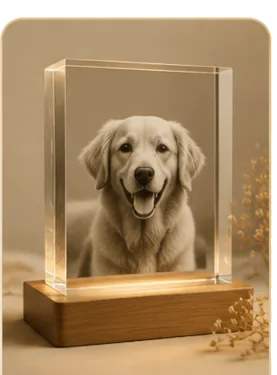
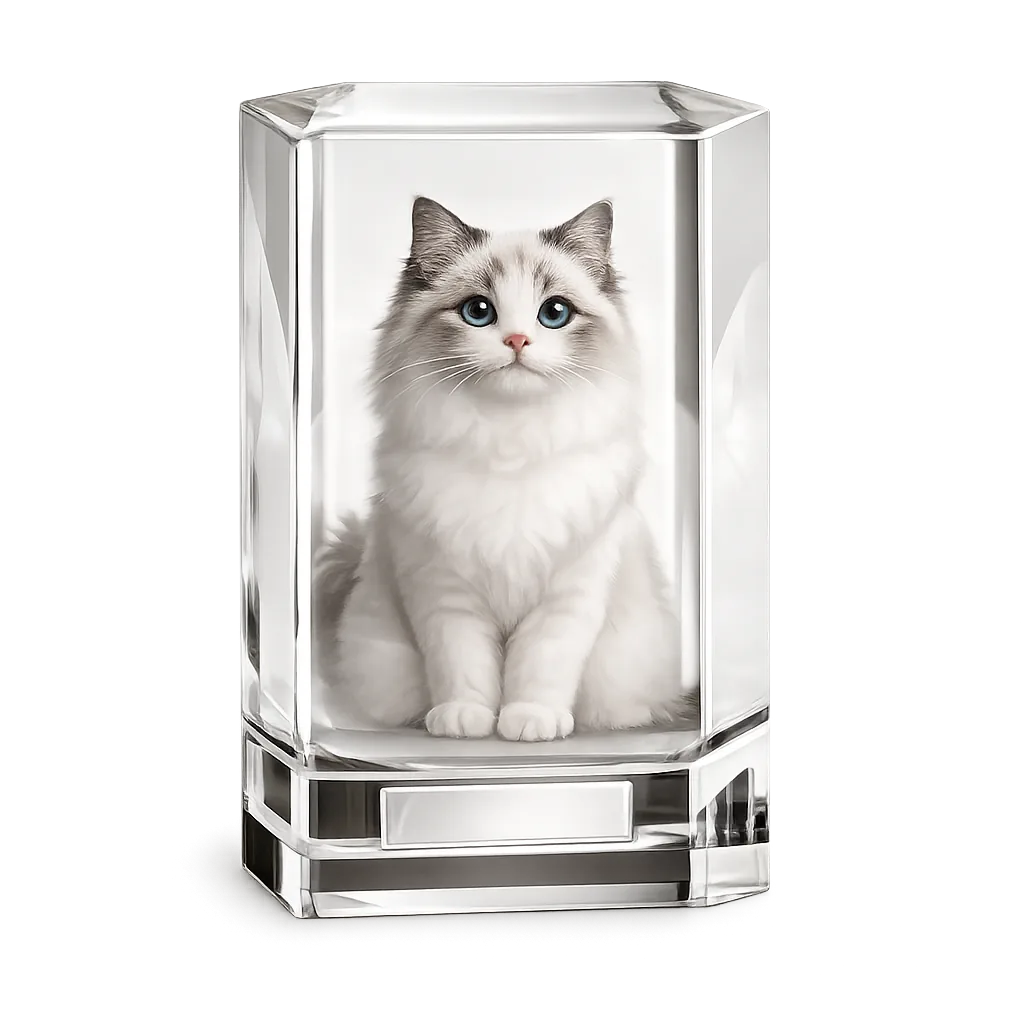
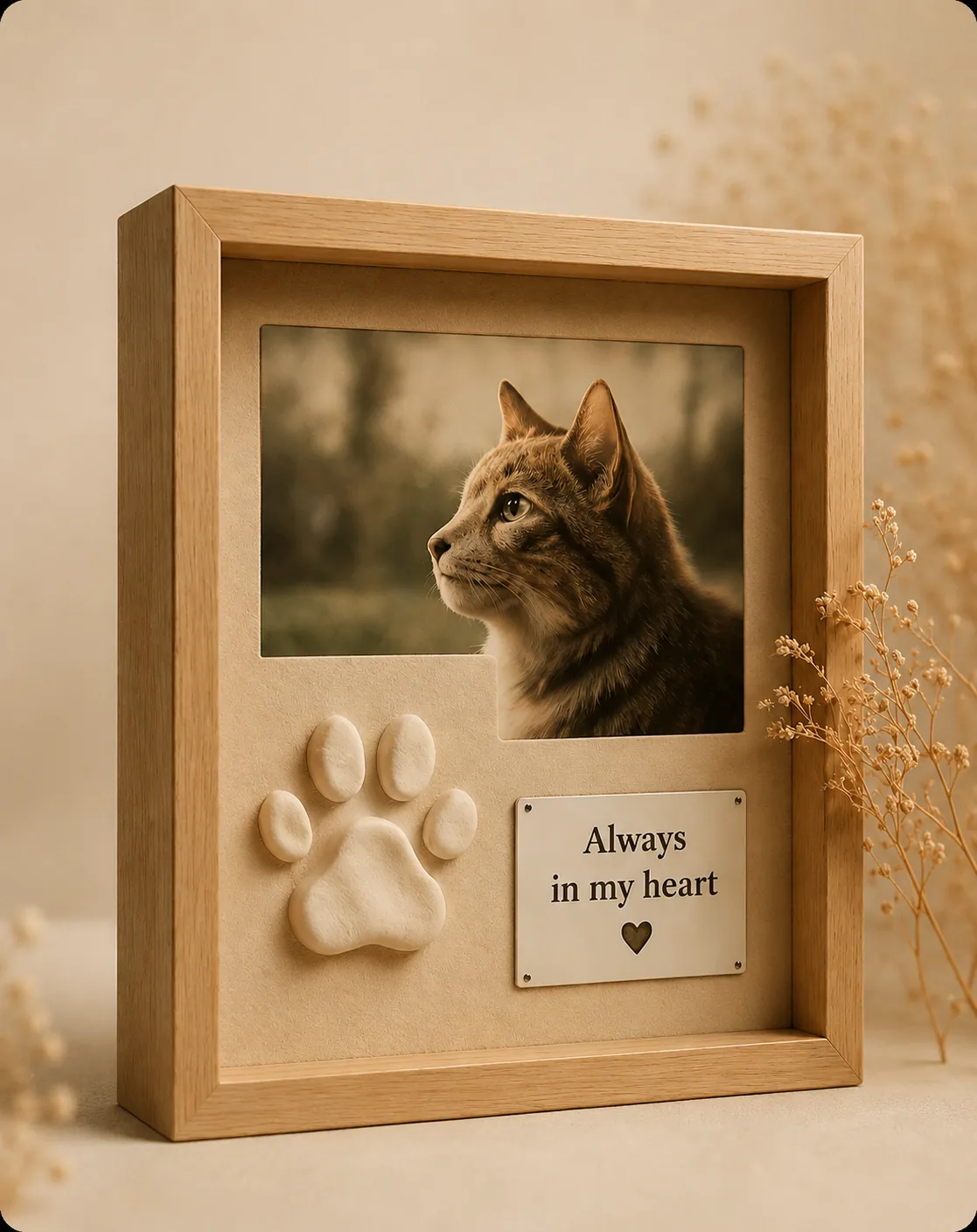
A customized 3d photo frame and a laser-etched crystal are different products. Paw & Ever currently offers the crystal format. Either approach works best when the pet has a clear outline: upright ears, a round face, a distinct muzzle, or a favorite pose. The depth effect should support recognition rather than turn the portrait into a novelty.
Photo checklist
Use a photo with the face forward or slightly turned, no heavy shadow across the eyes, and enough space around the head for shaping. A slightly imperfect but beloved photo can still be better than a sharp image that does not feel like them.
Pair the 3D portrait with minimal wording: name, dates, or one phrase such as "Always home" or "Our bright boy." Too much text can pull attention away from the depth effect.
Depth should serve recognition
A customized 3d photo frame can be moving when the depth effect helps someone recognize posture, face shape, and presence. It becomes weaker when the effect is the whole point. Start with the question: would this still feel like the pet if the 3D treatment were subtle? If yes, the design is probably on the right path. For dogs, muzzle shape, ears, and chest outline often carry recognition. For cats, eyes, head tilt, and markings matter. For birds or smaller pets, the pose may matter more than facial detail.
Depth-style memorials struggle when the background is full of furniture, toys, blankets, and people. The maker may be able to isolate the pet, but a cleaner image usually produces a calmer result. If the favorite photo has a messy background, do not discard it immediately. Ask whether the portrait can be cropped around the face or body. A beloved imperfect photo often beats a formal portrait with no personality. The goal is not showroom neatness. The goal is recognition without visual noise.
Use 3D for display, not every keepsake
A 3D frame or crystal usually belongs at home. It is not as private as jewelry and not as protective as a box. That makes it a good choice for someone who wants a place to look, especially in a room where the pet used to be part of daily life. If the person wants to carry the memory outside the house, jewelry or a keychain may fit better. If they are not ready to see the photo often, a keepsake box may be kinder.
Three-dimensional effects can become dramatic quickly. For pet memorials, restraint usually lasts longer. A clear portrait, simple base, and short engraving will age better than heavy glow effects, crowded symbols, or long poems. If the pet was playful, use the photo to show that playfulness rather than adding decorative noise. The frame should feel like a familiar presence in the room, not a memorial trying too hard to announce itself.
Review a proof with one honest question
When you receive a design proof, ask one honest question: "Would someone who loved this pet recognize them immediately?" If the answer is not quite, adjust crop, contrast, or photo choice before approving. Small changes can matter. A little more ear, a clearer eye, or a less cropped collar can bring the pet back into focus. Do not rush approval because you feel emotional. A careful proofing step is an act of care.
When a flat photo is better
A customized 3d photo frame is not always the best memorial. If the beloved image is a wide scene, a curled sleeping pose, a pet partly hidden under a blanket, or a photo with several people in it, a flat frame may preserve the memory more honestly. Depth effects work best on clear subjects. They can weaken photos where the setting is the point. If the memory is "the whole couch, the blanket, and the way he took up too much space," keep the flat photo.
It is tempting to order a 3D frame, crystal, plaque, and printed portrait all at once. That can make the memorial area feel crowded before the family has lived with any one piece. Start with one display object and let the room tell you whether it needs more. A strong 3D portrait can stand alone with a small card or collar nearby. Too many personalized pieces can make the memory feel designed instead of inhabited.
Choose scale by viewing distance
A desk piece can be small because the viewer is close. A mantel or shelf piece needs more size and contrast. A bedside piece should be gentle enough to see at night without feeling startling. Before ordering, measure the place where the frame will live. Then choose a size that belongs there. The right scale helps the portrait feel like part of the room rather than a product that has not found its home yet.
If the 3D frame comes from a specific day, save that context somewhere. A small note on the order, a card behind the frame, or a memory box entry can say, "Taken after the lake walk" or "Last Christmas morning." The 3D object shows the face; the caption restores the scene. Years later, that scene may be what brings the whole memory back.
What to ask before ordering
Ask whether the maker provides a proof, whether the background can be cleaned up, whether the 3D effect is based on one image or artist interpretation, and what happens if the likeness feels wrong. These questions matter because a memorial portrait is not just decor. It is a recognition object. The family should have a chance to catch problems before production, especially when the pet's expression, ears, markings, or posture are emotionally important.
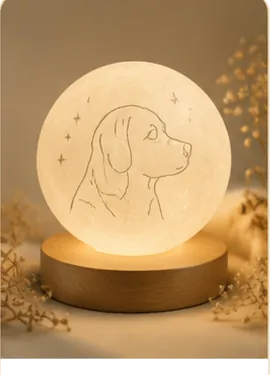
Sellers sometimes use customized 3d photo frame as a broad label for several formats. Ask what will actually arrive. A conventional frame holds a printed photograph. A crystal block uses internal laser engraving to create depth inside a freestanding object. Other products use layered prints or lenticular effects. Check the material, dimensions, display method, and proof process before ordering so the finished memorial matches the object you pictured.
Make room for ordinary photos too
A 3D portrait can become the centerpiece, but ordinary photos still matter. Keep the silly phone pictures, the messy couch picture, the half-blurry yard picture, and the image where the pet is only partly in frame. The 3D piece preserves likeness in a polished way. The ordinary photos preserve life as it actually happened. A good memorial can hold both without making one replace the other.
Choose the clearest photo you still recognize as your pet, confirm whether the product is a frame, layered print, or crystal, and review the proof carefully. Check the eyes, ear shape, markings, name, and dates before approving production. If the likeness feels wrong, pause and ask for a revision. The object is meant to bring back a familiar face, so accuracy matters more than finishing the order quickly.