Keepsakes
Dog christmas tree ornaments that feel like part of the family tree
How to choose dog christmas tree ornaments with a photo, name, date, or quiet memorial wording for the holidays.
Best fit
A memorial ornament works when the holiday tree already holds family history: school photos, old travel keepsakes, tiny handmade pieces, and the decorations that come out every December. The dog christmas tree ornaments that last are usually simple enough to hang each year without turning the whole holiday into a formal memorial.
Photo and wording
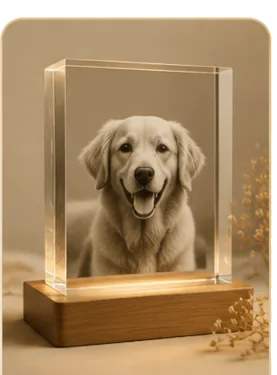
Use a photo with clear eyes, a recognizable outline, and one familiar detail like a collar, gray muzzle, or tilted ear. For text, a name and year often reads better than a full sentence. If the loss is recent, "Still with us at Christmas" may feel softer than a polished quote.
Gift timing
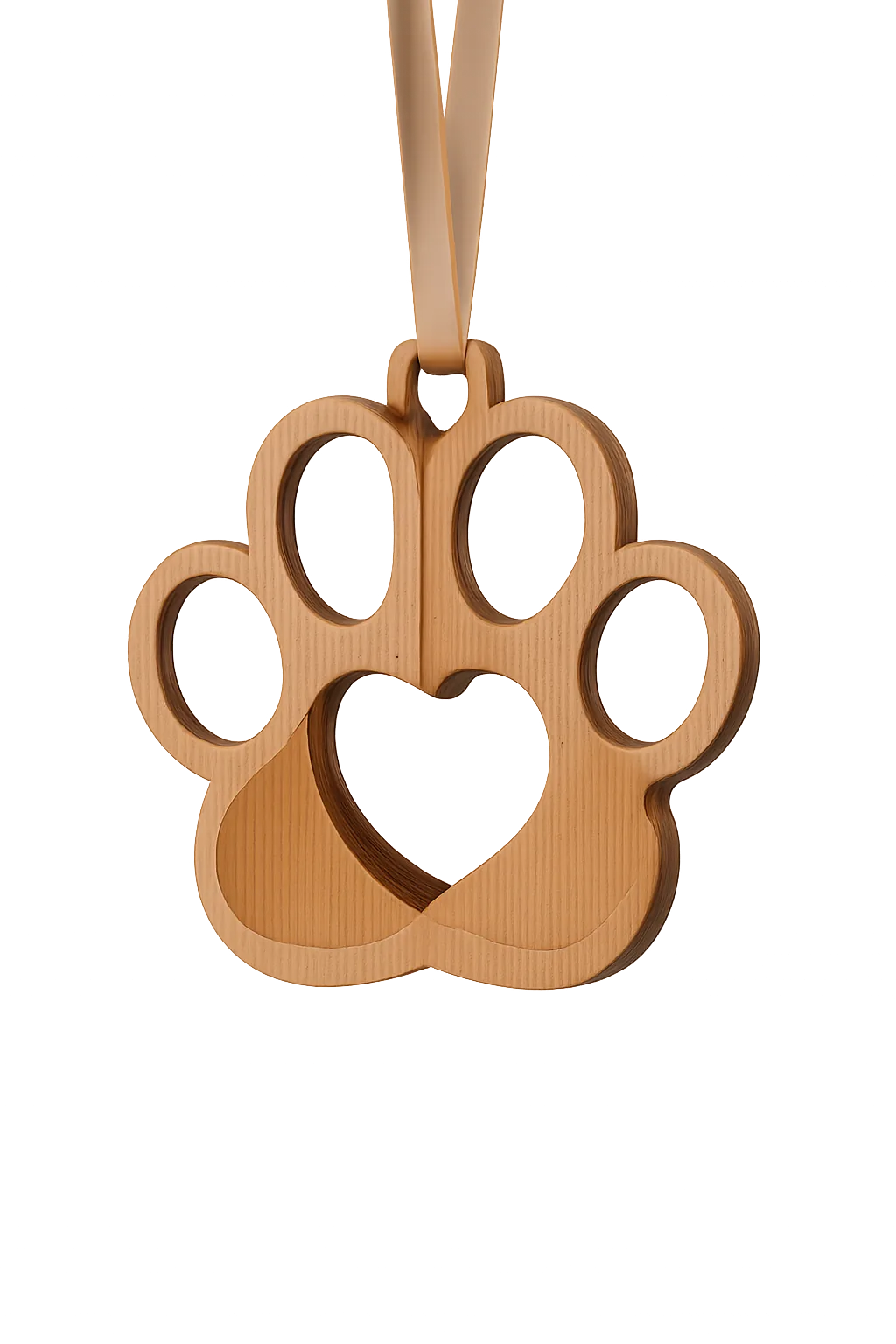
If the dog died close to the holidays, ask before ordering a surprise ornament. Some families want the dog on the tree right away. Others need one quiet season before they can open that box. A message first can make the gift feel considerate instead of sudden. The first holiday after losing a dog can make ordinary decorating feel complicated. A family may want the tree up because tradition matters, then stop cold when they reach the branch where the dog used to nose the lower ornaments. The best dog christmas tree ornaments do not try to fix that moment. They give it somewhere to go. A simple memorial ornament can be placed near the bottom if children want to see it, higher up if the family wants privacy, or beside a light so the photo catches a little warmth. Think about whether the ornament should feel festive, quiet, or almost hidden. A red bow and bright lettering may fit a dog who loved the noise of the house. A wood, crystal, or softly engraved piece may fit a family that needs the holiday to stay gentle this year.
Use a holiday memory if one exists
A Christmas ornament becomes more personal when it carries a true holiday detail. Maybe the dog slept under the tree skirt, stole wrapping paper, barked at delivery boxes, or wore a sweater for exactly three minutes before giving everyone a betrayed look. Those small details can shape the inscription, the photo choice, or the note that comes with the gift. If the ornament is for your own dog, look through December photos before choosing a formal portrait. The slightly messy picture, with ribbon on the floor or lights behind the ears, may feel more honest than the cleanest image in the camera roll. If it is a gift, ask for a favorite seasonal photo only if the person seems ready. Otherwise, use a year-round portrait and let the card carry the holiday memory.
Think about the first-year and tenth-year feeling
The first year is raw, but a memorial ornament may still be opened ten years from now. That is why wording should be tender without locking the family into one intense emotional tone forever. "First Christmas without you" may be right for a private ornament, but it can feel heavy each year after. A name, dates, and a phrase like "Always under our tree" can hold both the first hard season and the later softer ones. If the design includes a photo, choose one that feels like companionship rather than only farewell. The ornament should be able to age with the family, moving from fresh grief into family history without needing to be replaced. A dog ornament can be a beautiful sympathy gift, but timing matters. If the person lost their dog recently, a surprise ornament can land as either comfort or shock. Send a short message first: "I was thinking about making a small ornament for Cooper this year. Would that feel comforting, or would you rather wait?" That question gives the grieving person control. If they say yes, ask whether they want the dog on the main tree, a small tabletop tree, or kept in the box until later. A good memorial gift should never make someone perform gratitude while they are still trying to get through the day.
Keep the branch practical
Weight, size, and finish matter more than people expect. A heavy glass ornament may need a stronger branch and careful storage. A flat engraved piece is easier for households with children, frequent travel, or busy holiday storage bins. If the dog was large, playful, or always part of the family noise, a slightly bigger ornament can feel right. If the dog was quiet or the grief is private, a smaller piece may be better. Include a soft pouch or a marked box so the ornament is not lost in the general decoration bin. The care around storage is part of the memorial.
If there are several dogs in the family
Families with more than one dog may need a small system so the memorial ornament does not make the other pets feel like an afterthought. Use matching shapes with different names, or give the memorial piece a quieter finish while living pets have brighter seasonal ornaments. If children are involved, let them choose the branch or ribbon color. That small choice can help them participate without asking them to explain grief in adult language. The tree can hold the whole family story: pets who are still stealing wrapping paper, and the one whose spot is now remembered. When the holidays end, put the ornament away deliberately instead of tossing it into the general bin. Wrap it in tissue, place the card behind it, and label the box with the dog's name. Some families add one short note each year before storing it again: "We talked about you while hanging the lights" or "Your ornament went beside the gold star this year." The notes do not need to be poetic. They create a small annual record of remembrance, which can feel especially grounding as grief changes.
Let the card hold the longer story
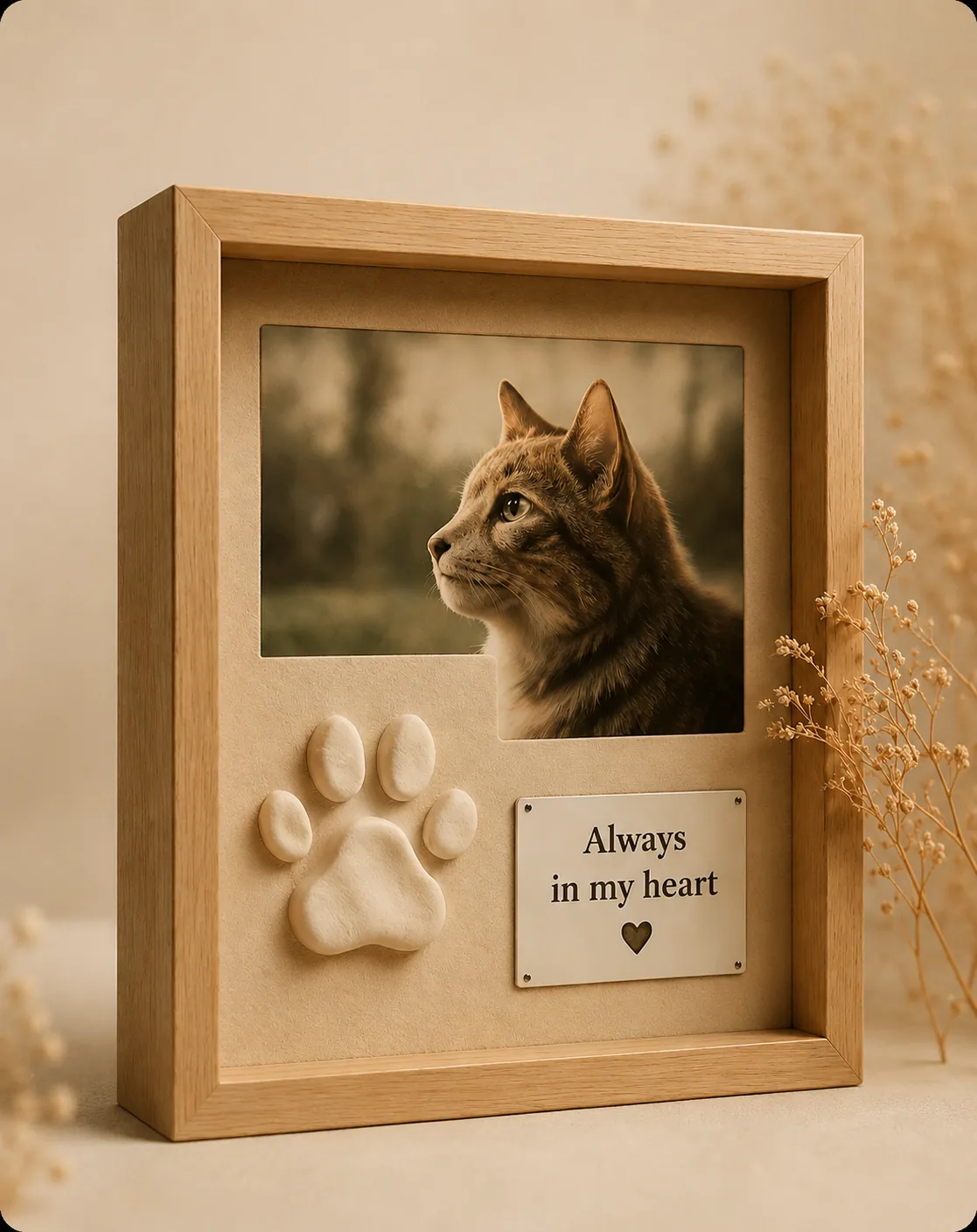
An ornament has very little room, so do not ask the engraving to carry every memory. Put the dog's name and one short line on the ornament, then use the accompanying card for the story: the wrapping paper they stole, the place they slept while presents were opened, or the way they followed everyone from room to room. The card can stay in the ornament box and return each December. If the family later creates a shadow box or memory page, that small written scene can become part of it.
A simple annual wording update
If the family likes rituals, keep the ornament wording permanent and let the card change each year. The ornament might say only the dog's name and dates, while a small note in the storage pouch says what the family remembered that Christmas. This avoids engraving a phrase that may feel too raw later, but still gives the holiday a place to hold new memories. Before ordering, look at the ornament as if you were opening the decoration box next year. Is the photo still easy to recognize? Is the wording gentle enough to live with after the first season? Does the ribbon, finish, or shape match the rest of the family's tree? A memorial ornament is small, but it returns with a whole holiday around it. That repeat use is what makes a careful choice worth the extra minute.
Choosing a memorial ornament
- 1Choose the familiar photo
- 2Keep wording short
- 3Check size and weight
- 4Ask about timing
Common questions
What photo works best for dog christmas tree ornaments?
Choose a photo with visible eyes, a clear outline, and an expression the family recognizes. A familiar holiday photo can matter more than a technically perfect portrait.
Should a memorial ornament include dates?
Dates are optional. A name and one short phrase often leave more room for the photo and can feel easier to bring out every year.
Is a memorial ornament a good surprise gift?
Ask first when the loss is recent. Some families want the ornament immediately, while others would rather wait until a later holiday.