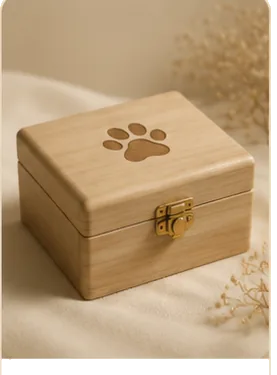
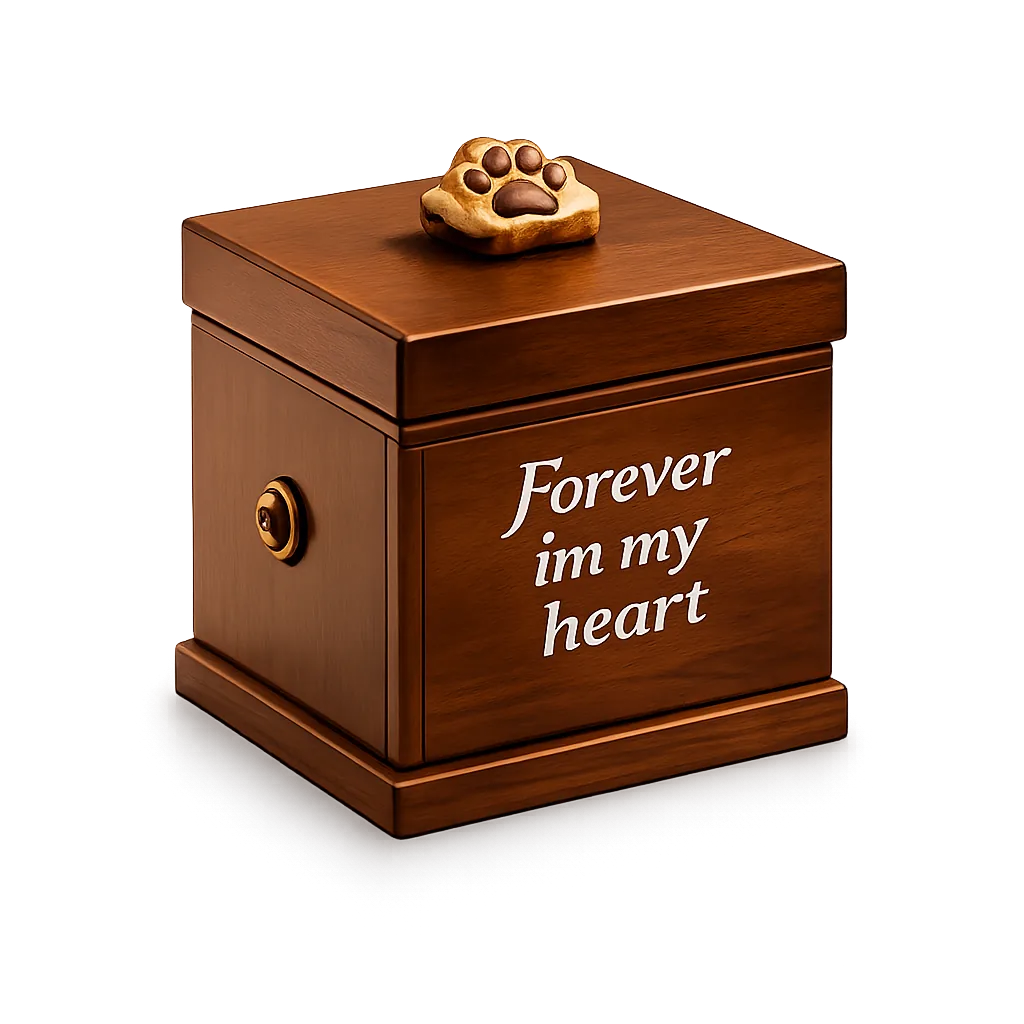
How to use a pet memory box for saved collars, tags, sympathy cards, photos, fur envelopes, and small keepsakes.
What goes inside
A pet memory box works best when it holds the objects that still feel too charged to sort: collar, tag, favorite photo, sympathy card, small toy, fur envelope, or handwritten memory. It should not become a storage bin for everything.
Private by design
The useful thing about a box is that it can close. Some days you may want to open it and remember. Other days you may need the memory protected but not visible. That control is part of the comfort.
Add a simple inner card with the pet's name, dates, and one line about what is inside. Future you will be grateful for the context, especially if several pets are remembered in the same home.
Sort by feeling, not by category
When you start a pet memory box, do not begin by asking what is valuable. Begin by asking what still feels impossible to throw away. A scratched tag, a faded bandana, a half-used roll of waste bags, or a birthday card from the vet may matter more than a formal certificate. Put everything in one temporary place first. Later, you can choose what stays. The first version of the box does not have to be beautiful. It only has to protect the objects from being lost during the numb days when cleaning can happen too quickly.
A pet memory box is easier to return to when it has small layers. Place flat papers at the bottom: adoption records, sympathy cards, printed photos, or a letter. Put fabric items next: bandana, collar, small blanket square, or clothing with the pet's hair still on it if you want to keep that. Put the most handled object on top, such as the tag or favorite photo. This arrangement is not about display perfection. It helps the person opening the box understand the memory slowly, without everything arriving at once.
Leave room for later memories
Do not fill the whole box on the first day. Later, you may find a photo in an old phone, a holiday card, a tag from a boarding visit, or a note from a neighbor. Leave space for those discoveries. Grief often releases memories in pieces. A box with a little empty room says the story can keep arriving. It also prevents the memorial from feeling sealed shut before the family is ready.
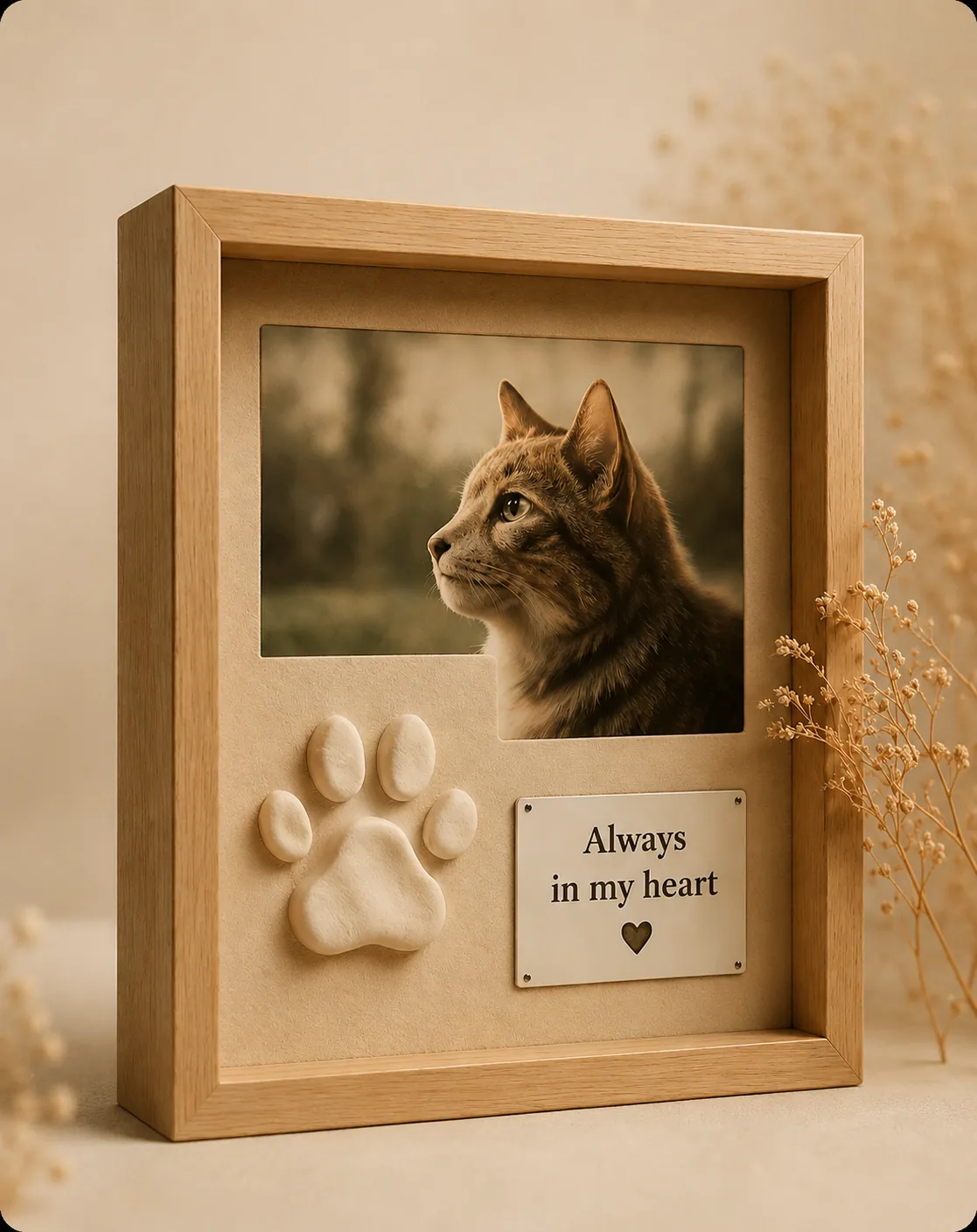
Some people feel comfort from a framed collar or photo shelf. Others feel ambushed by visible reminders. A pet memory box protects both needs. It keeps the objects honored without requiring daily viewing. This is especially helpful in shared homes where family members grieve differently. One person can open the box on a hard night. Another can leave it closed. The same memorial can hold different rhythms of grief without forcing agreement.
Add one handwritten inventory
A simple handwritten list can become surprisingly meaningful: "Blue collar from beach walks. Silver tag from the old apartment. Photo from the last snow." The list turns objects back into stories. It also helps years later when someone opens the box and wonders why a small item mattered. Keep the handwriting imperfect. The personal trace of the person who made the box can become part of the keepsake too.
What not to put in the box
Do not put anything damp, dirty, or strongly scented into a closed pet memory box without preparing it first. Wash or fully dry fabric if preserving scent is not important to you. Keep food, treats, or organic items out unless they are sealed in a way that will not attract pests. If a toy is too large or worn to store safely, photograph it and keep the photo instead. A memory box should protect the story, not create damage that makes opening it stressful later.
A family may need one shared box or several smaller boxes. One box works when everyone wants a central place for the collar, photos, and letters. Several boxes work when children, partners, or roommates each need a private piece of the memory. If you divide items, do it with care. Give each person a photo copy and one small object or note. The goal is not equal value. The goal is that each person has something they can return to.
Use the box before it is finished
A pet memory box does not need a final arrangement before it can help. In the first week, it can simply keep things safe. A month later, you might add labels. Six months later, you might print photos. On the adoption day, you might add a letter. Let the box change. A living memorial, even for a pet who has died, can keep making room for memory as the family becomes ready to touch it.
Some families keep a private box and also create a public memorial page, photo frame, or ornament. Others need only the box. The private version can hold the raw objects: collar, fur, last card, old tag. The public version can hold the polished photo and shorter story. This split is useful because not every memory needs to be displayed for guests. Some memories are important because they remain protected.
A memory box for children
For children, a pet memory box can make grief less abstract. Let the child choose one photo, draw a picture, or write a note to place inside. Keep the choices limited so the task does not become overwhelming. A child may want to open the box often at first, then ignore it for weeks, then return suddenly with a new question. That rhythm is normal. The box gives the child a place to put love when the pet is no longer physically there.
If the household has loved several pets, decide whether each pet gets a separate box or one larger family archive. Separate boxes keep each story clear. A shared archive can work if it has labeled envelopes, dividers, or smaller inner boxes. Do not rely on memory alone to identify tags, collars, or photos years later. Labeling may feel practical, but it protects the emotional meaning of each object.
Photograph the box contents
Once the box feels mostly settled, take a photo of the contents laid out simply. This gives you a backup record and a way to share the memorial with a family member who lives elsewhere. It also helps if the box is ever moved, damaged, or reorganized. The photo does not replace the objects. It preserves the arrangement you made when the memory felt close enough to touch.
The outside of a pet memory box does not need to announce everything inside. A name, small date, or quiet mark is enough. The private objects can hold the deeper story. Simple exterior wording also makes the box easier to keep in a bedroom, closet, or shared room without feeling exposed every time someone walks past.